Dreaming about more elbow room, quiet nights, and space for a garden or workshop in Fayette County? Buying a home with acreage gives you freedom, but it also asks for a bit more homework. You want to be sure the road is legal, the septic and well are sound, and your plans for outbuildings or animals fit local rules. This guide walks you through the key checks so you can buy with confidence and avoid costly surprises. Let’s dive in.
Fayette County acreage at a glance
Buying acreage here is different from an in-town lot. Many rural homes rely on private wells and septic, and access may be by private road instead of a public street. The county enforces zoning and building rules, and floodplain permits can apply in mapped areas. Historic mining and oil and gas activity also show up in some locations, so a quick environmental scan helps.
Start with the basics:
- Confirm the parcel’s zoning and permitted uses with the county’s zoning office.
- Know that many projects, like a detached garage or barn, require a county permit; the fee is typically 1% of construction cost as outlined in the Homeowner Guide to Building Permits.
- Expect to request septic and well records, verify legal access, and check flood maps during your due diligence.
Start with access and roads
Confirm legal access
Legal access is not the same as a visible driveway. Verify the recorded access route in the deed and title commitment. Use the County Clerk’s records for easements and maintenance agreements and double-check parcel lines in the WV Property Viewer.
Public vs. private roads
Some tracts front public roads, while many use private drives. On private roads, owners typically share maintenance unless a recorded agreement says otherwise. If you plan a new or widened driveway connection to a state route, expect to follow state entrance requirements and seek the proper permit.
What to look for during showings
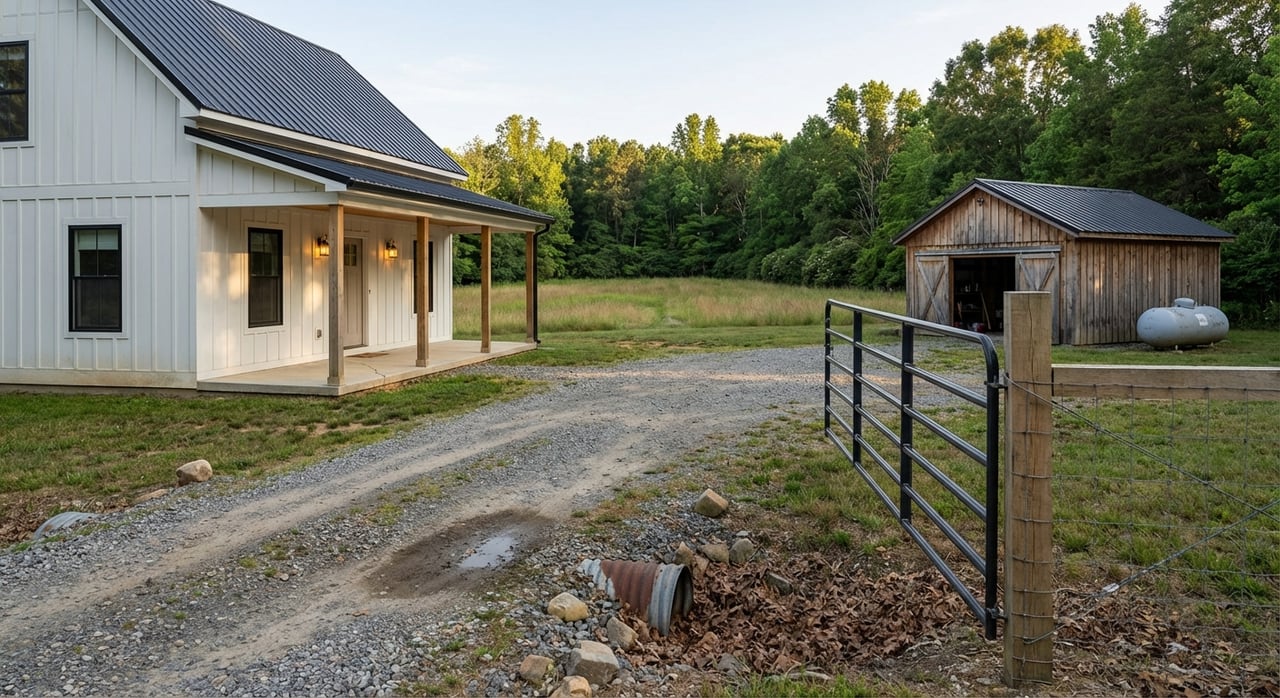
Notice the road surface, slope, drainage, and culverts. Ask who plows snow, how grading is handled, and whether neighbors share costs. If access crosses another property, ask for the recorded easement rather than relying on a verbal right-of-way.
Understand zoning and permits
Zoning basics
Before you assume you can add animals, start a small business, or build a large shop, check the parcel’s zoning district and any overlay or special-use conditions with the Fayette County Zoning Department. Ask about setbacks, accessory structure sizes, and whether a special use or variance is needed.
Building permits and typical projects
Fayette County requires permits for most structural work, including new dwellings, detached or attached garages, large sheds, decks, porches, and certain re-roofing projects. The Homeowner Guide explains common permit triggers and inspections. Building permit fees are generally 1% of construction cost, so factor that into your budget.
Floodplain rules
If any part of the property is in a mapped flood zone, you may need a local floodplain permit and elevation standards can apply. Flood status can also affect lender requirements and insurance. Check flood overlays in the WV Property Viewer and ask the county about floodplain permits if the map shows a hazard area on the tract.
Water, septic, and wells
Septic records and inspections
Septic systems require county permits and inspections. Do not assume an existing tank is legal or adequate. Ask the seller for the septic permit, design or as-built, and pump-out or inspection records. The Fayette County Health Department lists permits and contacts on its Environmental Health septic page.
Private wells and water testing
New or modified wells require permits and must be drilled by a licensed well driller. Request the well permit, well log, and recent lab results for bacteria and nitrates. State guidance and local contacts are available through WV DHHR’s OEHS on individual water supplies.
Public utilities where available
Some areas may have public water or sewer, but many acreage properties do not. Confirm the status in writing, and plan for maintenance on private systems if a connection is not available.
Utilities and internet
Electric service
Appalachian Power is the primary electric utility in much of the county. Ask if service already exists and whether a line extension or upgraded service is needed for your plans. Start with the utility’s West Virginia resources via Appalachian Power.
Internet reality check
Coverage varies from address to address. You may see cable or DSL in some areas and fixed wireless or satellite in remote spots. Run direct address checks and speed tests with providers and use this local overview as a starting point: internet service options in Fayette County.
Environmental and title checks
Soils, slope, and drainage
Soil type and slope affect foundation design, driveway stability, and septic suitability. Plan for a perc test and a site evaluation before you commit to major changes. If you expect to add bedrooms or convert a barn, confirm that the septic and soils can support it.
Mining and oil and gas
Fayette County has historic coal mining. Look for signs of abandoned mine lands, highwalls, or subsidence risks. WVDEP posts updates and mapping resources; use these as a starting point and ask your title company to search property records. Learn about current programs through the WVDEP’s Abandoned Mine Lands resources.
Mineral rights and deed restrictions
Mineral rights are often severed from surface rights in West Virginia. Review the title commitment and deed for any mineral reservations, utility easements, or restrictive covenants. You can search recorded documents through the County Clerk’s office at the Fayette County Clerk page.
Taxes, farm-use valuation, and upkeep
Property taxes and farm-use valuation
Ask the seller for the latest tax bill and confirm amounts with the county tax office. If you plan to farm, West Virginia allows a farm-use valuation for qualifying agricultural land with defined production thresholds. Check eligibility and filing timing with the county assessor before you buy.
Ongoing upkeep checklist
Budget for regular rural upkeep. Common items include:
- Private road and driveway maintenance, including grading, culverts, and snow clearing.
- Septic pumping and inspections. EPA guidance often suggests 3 to 5 years for pumping frequency, depending on use and system type.
- Well maintenance and routine water testing.
- Fence repair for livestock, invasive species control, tree work, and erosion control.
- Trash and recycling. Service options vary by area; verify local collection and disposal expectations.
A simple due diligence plan
Use this step-by-step plan to keep your purchase on track:
- Confirm legal access and road status
- Ask your agent and title company to identify the recorded access route and any maintenance agreements. Verify in the County Clerk records and check parcel lines in the WV Property Viewer.
- Check zoning and allowed uses
- Call the Zoning Department to confirm the district, setbacks, and whether animals, outbuildings, or a home business are allowed.
- Review permits and inspections for existing structures
- Request past building permits and final inspection sign-offs. See the Homeowner Guide for typical permit triggers and fees.
- Evaluate flood risk
- Look up flood overlays in the WV Property Viewer. If mapped, discuss county floodplain permits and insurance with your lender and insurer.
- Verify septic and well
- Request the septic permit, design or as-built, and pump-out records from the seller and confirm with the Health Department’s septic resources. For wells, ask for the permit, well log, and recent lab test results; see OEHS guidance on individual water supplies.
- Confirm utilities and internet
- Contact Appalachian Power about service availability or line extensions. Run address checks with internet providers and review local options via the Fayette County ISP overview.
- Scan for environmental red flags
- Ask your title company about any oil and gas well records and review WVDEP’s Abandoned Mine Lands resources for known AML features near the parcel.
Buying acreage is about matching your vision to what the land and rules will support. With the right records, inspections, and a clear plan, you can move forward with confidence. If you want a local partner who knows rural property, permits, and renovation potential, connect with LILLYWOOD REALTY to get started.
FAQs
What permits do I need for a barn or detached garage in Fayette County?
- Many outbuildings require a building permit and inspections, and the county lists common triggers in its Homeowner Guide; permit fees are generally 1% of construction cost.
How do I verify legal access to a rural property?
- Confirm the recorded access route and any maintenance agreements in the County Clerk records and compare parcel lines and flood overlays in the WV Property Viewer.
What should I check for septic and well systems before I buy?
- Request the septic permit, design, and pump-out records and confirm with the Health Department’s septic resources; for wells, ask for the permit, well log, and recent bacteria and nitrate lab results per OEHS individual water supplies.
How can I check flood risk on a Fayette County parcel?
- Use the WV Property Viewer to see flood overlays and then ask the county about any required floodplain permits and how flood status may impact building standards or insurance.
Will I get reliable internet at a rural address?
- Coverage varies by location; run address checks with providers and use the local Fayette County ISP overview as a starting point, then confirm speeds directly with the company.
Are there mining or oil and gas issues I should screen for?
- Review WVDEP’s Abandoned Mine Lands resources and ask your title company to search for oil and gas well records, including any plugged or orphan wells noted in state databases.