Buying land sounds simple until you realize that a beautiful piece of property is only part of the story. In Greenbrier County, your first land purchase needs to work on paper just as well as it looks in person. If you want to avoid expensive surprises, this guide will help you focus on the checks that matter most before you buy. Let’s dive in.
Why raw land needs extra homework
When you buy an existing home, many basics are already in place. With raw land, you may still need to confirm access, utilities, septic feasibility, floodplain issues, and whether your intended use fits local rules.
That matters in Greenbrier County because rural land is not automatically unrestricted. The county has a geographically limited zoning ordinance, a county-wide subdivision ordinance, an adopted county-wide building code, and a comprehensive plan. Some incorporated areas, including places like Lewisburg, White Sulphur Springs, and Rainelle, may also have their own planning structure or ordinances.
Start with allowed use
Before you fall in love with a parcel, confirm what you want to do there. If your goal is to build a home, create multiple lots, place a driveway, or hold land for future development, those plans should be checked against the county’s zoning map and ordinance.
Greenbrier County’s comprehensive plan page includes interactive maps for future land use, zoning classes, protected areas, transportation, natural features, public water and sewer service, and public services. For a first-time buyer, these maps are a smart first screen before you spend money on surveys, engineering, or other due diligence.
Check for subdivision limits
If you are buying a larger tract, ask whether the parcel is affected by subdivision rules or conservation restrictions. The county says it has a county-wide subdivision ordinance, which can affect how land is split and approved.
This is also important for farmland and large rural tracts. The Farmland Protection Board may acquire conservation easements, and those easements can prohibit further development or subdivision of protected land.
Confirm legal and practical access
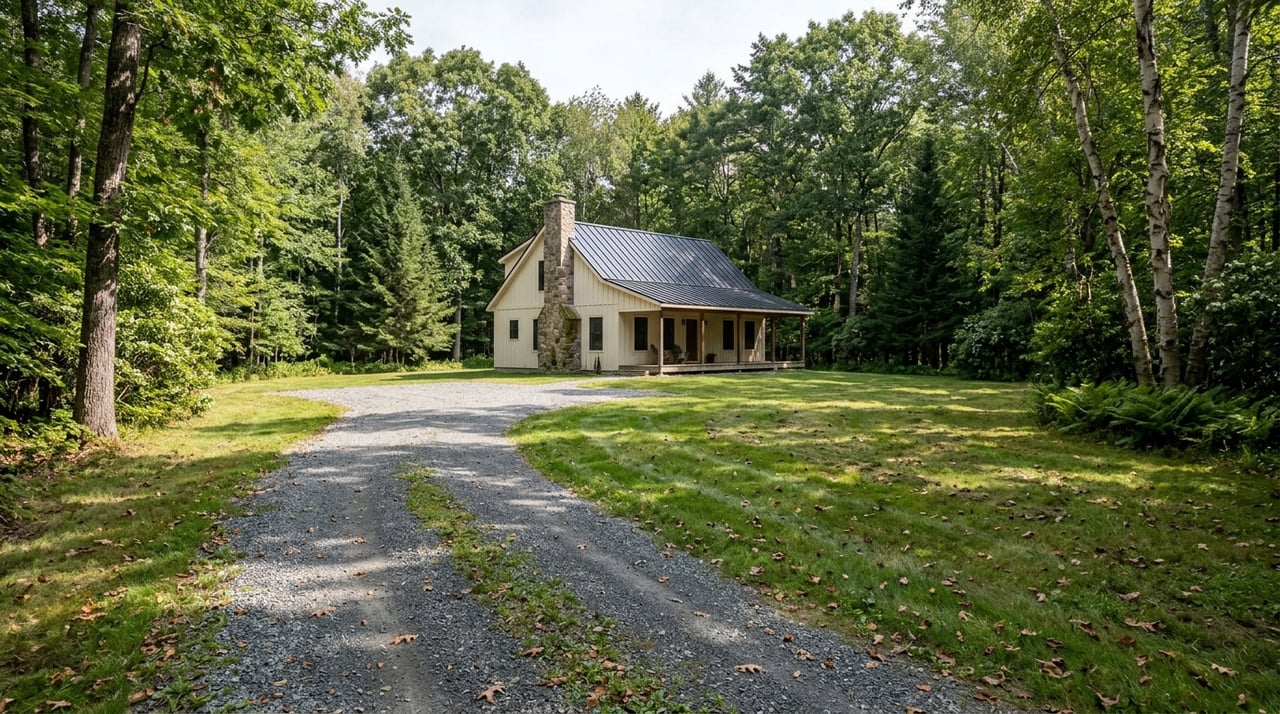
Access is one of the biggest issues for first-time land buyers. A parcel may look reachable on a map, but you still need to verify how you legally and physically get to it.
Under West Virginia law, owners of property abutting an existing state highway generally have a right of reasonable ingress and egress unless access is limited by law. Still, any driveway connecting to a state highway requires a West Virginia Division of Highways permit, and the county planning office says new access to public roads requires a WVDOH driveway permit.
What to verify early
Ask questions like these before moving forward:
- Does the parcel have recorded road frontage or easement access?
- Is the current access already in place, or will you need a new driveway permit?
- If access crosses another property, is the easement clearly described in the deed?
- Does the route on paper match what you can actually see on the ground?
The county permit application also requires tax district, map, parcel, and 911 address information. It states that easements, deed restrictions, and other encumbrances must be shown on site plans, which is another reason to verify access early.
Research title and parcel details
A listing sheet is not enough when you are buying land. You want to confirm ownership, parcel boundaries, and how the property is legally described in public records.
In Greenbrier County, the county clerk records documents and offers deed inquiry tools and public computer stations. The county assessor’s parcel viewer also lets you search by parcel ID, owner, and address while viewing parcel data, roads, soils, hydrography, and aerial imagery.
Use county records as your starting point
These offices are practical first stops because they help you compare the recorded description to the map and the ground. If something looks unclear, that is your sign to slow down and get professional help.
It is also important to know what the county does not review. The planning office says it does not oversee or enforce private deed covenants or restrictions, so those questions still need attorney or title-company review.
Understand water, sewer, septic, and wells
Utilities can make or break a land purchase. Some parcels may have access to public water and sewer, while others will need private well and septic planning.
If public service is available, the county requires written documentation from the applicable public service district or municipality confirming adequate service. If public service is not available, your due diligence should include septic and well permitting through the county health department.
Why septic feasibility matters so much
The Greenbrier County Health Department approves and inspects onsite septic systems and water wells. For newly created lots, a subdivision permit must be issued before a septic installation application can even be submitted.
The septic application requires completed perc test results and health-department-verified observation hole results. Septic installations and well drilling must also be done by West Virginia-certified installers or drillers.
Private water testing can be part of the process
If a parcel relies on a private well or you are evaluating a site for one, the health department can sample private water for total and E. coli coliform bacteria. That can be a useful step when you want more confidence about water quality during your planning process.
Review floodplain and site conditions
A parcel can be buildable in theory but costly in practice. That is why floodplain status and site conditions deserve attention before you close.
The county planning office completes a floodplain determination for every building permit application. If a project is in the floodplain, the county may require an elevation certificate or a dry flood proofing certificate from a West Virginia registered surveyor or engineer.
Don’t overlook grading and earthwork
Site preparation can also trigger other requirements. The county notes that some excavation work may require an NPDES permit from the West Virginia Division of Environmental Protection.
This means the cost of building on raw land is not just about buying acreage. You may also be budgeting for grading, drainage work, engineering, and flood-related documentation depending on the parcel.
Know what permits come next
Many first-time buyers assume permits happen much later. In reality, permit requirements can shape whether a parcel makes sense for your budget and timeline.
Greenbrier County says a permit is required for all construction, improvements to, or demolition of any structure within the county. New homes, additions, and new commercial projects will not receive building permits until septic permit documentation or proof of public sewer service is provided.
Plan for the 911 address step
Before a certificate of occupancy is issued, a physical 911 address must be obtained. That may sound like a small detail, but it is part of the path from raw land to a completed home.
Project size matters too. Residential projects over 2,000 square feet require plans certified by a West Virginia registered design professional. Commercial projects require a West Virginia-registered design professional plus state fire marshal plan review.
Build your local due-diligence team
Buying land in Greenbrier County usually means working with several offices and professionals, not just a seller and a lender. The exact team depends on the parcel, but the usual lineup is fairly consistent.
You may need help from the planning and permits office, health department, county clerk, assessor, WVDOH, and, when needed, a surveyor or engineer. For deed, access, and private restriction questions, an attorney or title company remains essential.
A practical first-time buyer checklist
Use this checklist to stay organized:
- Confirm the parcel’s zoning and future land use map context
- Check whether the property is in an incorporated area with added local rules
- Verify road frontage, easements, and driveway permit needs
- Review deed records and assessor parcel data
- Ask whether public water and sewer are available
- If not, investigate well and septic requirements
- Check floodplain status and site conditions
- Ask whether conservation easements or subdivision limits apply
- Estimate the cost of surveys, permits, engineering, and site work
- Bring in an attorney or title company for deed and restriction review
What first-time land buyers should remember
The biggest mistake with raw land is focusing only on price per acre. In Greenbrier County, the better question is whether the parcel supports your actual plan.
That means looking at access, utilities, allowed use, flood risk, and whether the property can pass health and permit review. When you take those steps early, you give yourself a much better chance of buying land that fits your goals instead of creating expensive surprises later.
If you are starting your land search in Greenbrier County, working with a local agent who understands rural property can make the process feel much more manageable. For hands-on guidance as you compare parcels, organize due diligence, and plan your next move, start your search with a local expert at LILLYWOOD REALTY.
FAQs
What should first-time land buyers check first in Greenbrier County?
- Start with allowed use, access, and utility options. In Greenbrier County, it is smart to review the zoning map, future land use maps, road access, and whether public water or sewer is available before spending money on deeper due diligence.
Does rural land in Greenbrier County have zoning or land-use rules?
- Yes. Greenbrier County has a geographically limited zoning ordinance, a county-wide subdivision ordinance, an adopted county-wide building code, and a comprehensive plan. Some incorporated areas may also have their own planning rules or processes.
Do you need a driveway permit for land in Greenbrier County?
- If you are creating new access to a public road, the county planning office says a WVDOH driveway permit is required. Any driveway connecting to a state highway also requires a permit.
How do you check ownership and parcel records in Greenbrier County?
- A practical starting point is the county clerk for deed records and the county assessor’s parcel viewer for parcel data, aerial imagery, soils, roads, and map information.
What if a Greenbrier County land parcel does not have public water or sewer?
- If public service is unavailable, you will likely need to evaluate private well and septic options through the county health department. Septic applications require perc test results and verified observation hole results.
Can floodplain issues affect a land purchase in Greenbrier County?
- Yes. The county completes a floodplain determination for every building permit application. If the project is in the floodplain, additional documentation such as an elevation certificate or dry flood proofing certificate may be required.
Do conservation easements matter when buying farmland in Greenbrier County?
- Yes. The county says conservation easements acquired through the Farmland Protection Board can prohibit further development or subdivision of protected land, so buyers should verify whether any easement affects the parcel.